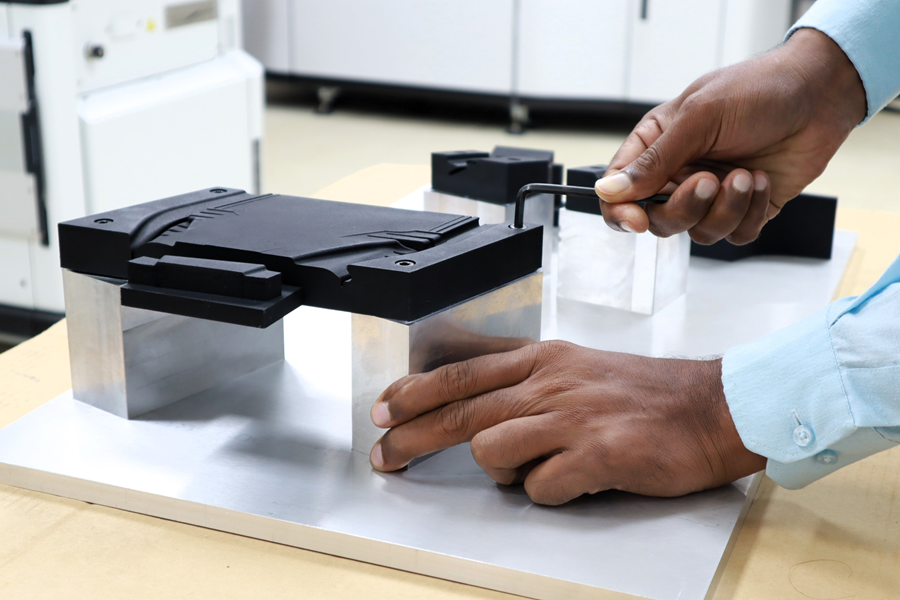
HP MJF 3D Printing for Jigs and Fixtures: Optimizing Industrial Efficiency with Custom Tooling
Jigs and fixtures are critical tools in modern manufacturing, directly influencing accuracy, repeatability, and productivity. Conventional methods such as CNC machining and fabrication often result in long lead times, high costs, and limited design flexibility. HP Multi Jet Fusion (MJF) 3D printing offers a powerful alternative for manufacturing jigs and fixtures by enabling rapid customization, reduced lead times, improved ergonomics, and lower total cost of ownership.
This white paper explains how Amuse 3D uses HP MJF 3D printing to design and manufacture high-performance jigs and fixtures for industrial applications. Through real-world case studies and proven implementation strategies, we demonstrate how HP MJF delivers measurable ROI for low- to medium-volume tooling.
About Amuse 3D
Amuse 3D is a leading advanced manufacturing company in India, specializing in HP Multi Jet Fusion 3D printing for production-grade components, jigs, and fixtures. The company serves global customers across automotive, medical, aerospace, electronics, and industrial sectors.
Key Highlights:
- 50,000+ sq. ft. integrated manufacturing facility
- 3 million+ parts manufactured annually
- 500,000+ HP MJF 3D printed parts per year
- Customers in 10+ export countries
- 1,000+ global customers
- India’s largest HP MJF machine install base
- ISO 9001:2015 and IATF 16949:2016 certified
Design, prototype, and mass-produce, all under one roof.
Introduction to Jigs and Fixtures
Jigs and fixtures are manufacturing aids used to locate, support, and guide workpieces during production and inspection. Well-designed jigs and fixtures improve process stability and reduce dependency on operator skill.
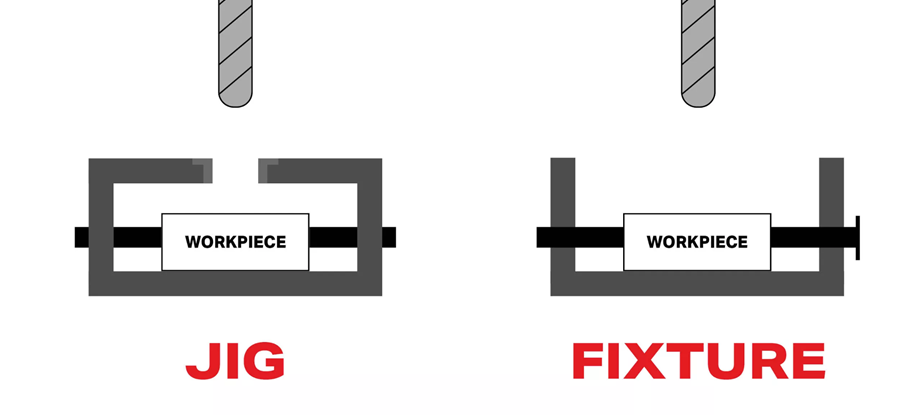
Industrial studies show that effective tooling can deliver:
- Up to 50% reduction in setup time
- Up to 70% reduction in labor cost through repeatability and automation
Why Use HP MJF 3D Printing for Jigs and Fixtures?
HP MJF 3D printing has become a preferred solution for producing jigs and fixtures due to its speed, accuracy, and design freedom. Unlike traditional manufacturing, MJF enables complex geometries, lightweight structures, and rapid iteration without tooling investment.
Key advantages include:
- Rapid design-to-production cycles
- Lightweight, ergonomic tooling
- Complex internal geometries and conformal features
- Reduced dependence on CNC machining
- Cost efficiency for low- and medium-volume production
Industrial Case Studies Using HP MJF
Heli-Coil Drill Jig
A custom heli-coil drill jig was manufactured using HP MJF to improve drilling accuracy and reduce rejection rates.
Performance:
- Lead time: 24 hours
- Part cost: ₹2,150
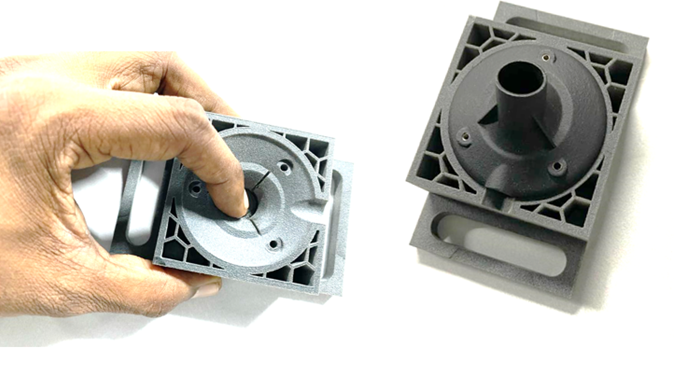
Benefits included improved ergonomics, reduced rework, and faster deployment compared to metal tooling.
Paint Masking Jigs
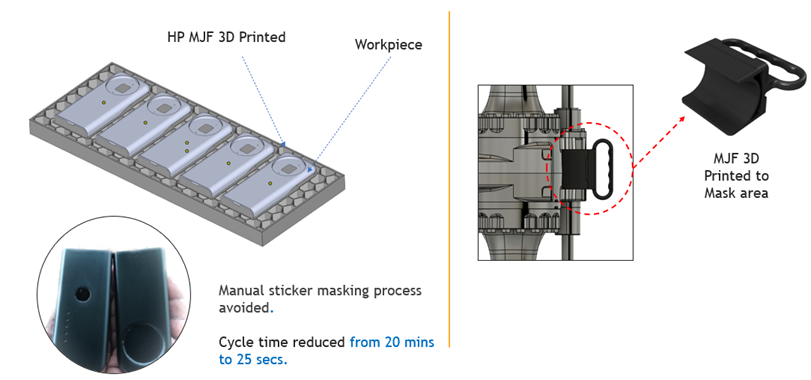
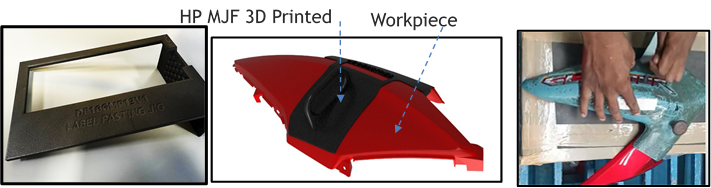
Manual masking using tapes and stickers consumed nearly 20 minutes per part. An HP MJF-printed masking jig reduced cycle time dramatically.
Results:
- Cycle time reduced from 20 minutes to 25 seconds
- Improved consistency and repeatability
- Elimination of manual masking errors
Checking Fixtures
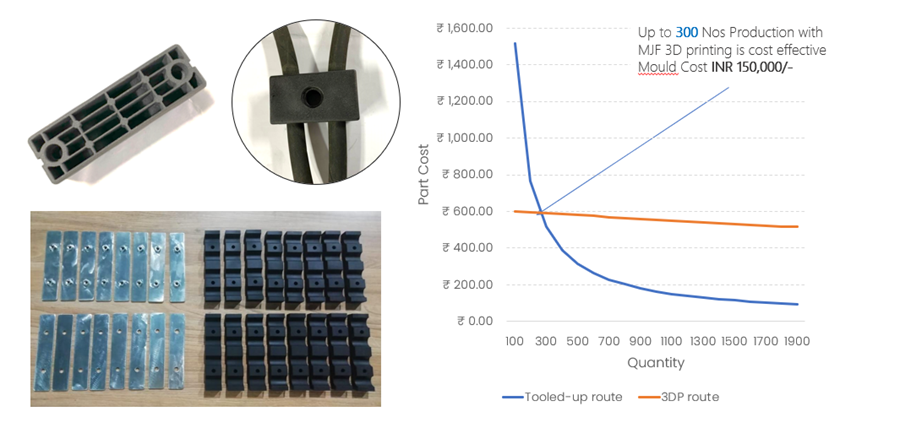
Traditional checking fixtures require complex machining, multiple assemblies, and long lead times. Using HP MJF, development time was reduced to 72 hours with approximately one-third of the conventional cost.
Additional benefits included simplified assemblies and online QC inspection capability.
Implementation Strategies for HP MJF Tooling
To maximize ROI from HP MJF 3D printed jigs and fixtures, manufacturers should focus on:
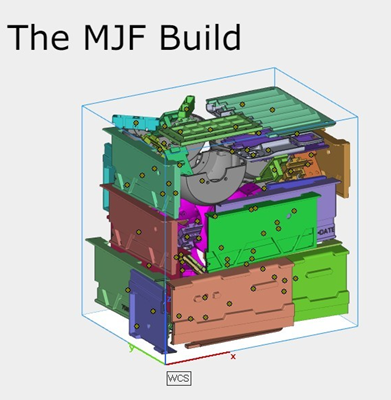
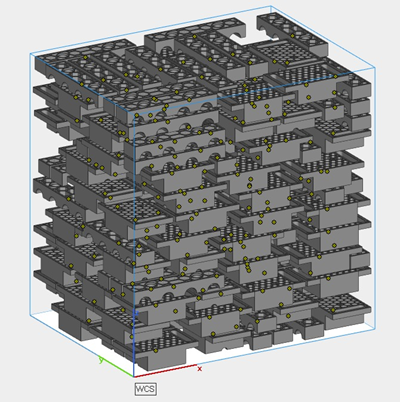
- High nesting density during builds
- Batch production of tooling components
- Fast design iteration enabled by digital workflows
Ideal applications include low- to medium-volume jigs, fixtures with complex geometry, and lightweight tooling.
Overcoming Common Challenges
While HP MJF offers significant advantages, certain challenges must be addressed:
Tight tolerances below 50 microns can be achieved through hybrid manufacturing that combines MJF with secondary machining operations.
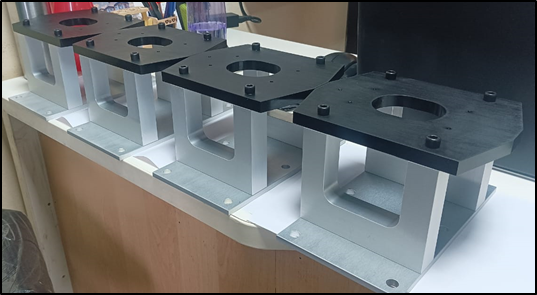
For large or geometrically simple parts, hybrid designs using printed cores with machined interfaces provide optimal cost-performance.
Material limitations can be addressed through Design for Additive Manufacturing (DFAM) principles.
Conclusion
HP Multi Jet Fusion 3D printing is an ideal solution for manufacturing customized jigs and fixtures where speed, flexibility, and cost efficiency are critical. By combining DFAM principles, hybrid manufacturing strategies, and production-grade post-processing, manufacturers can significantly reduce setup time, improve quality, and achieve faster return on investment.
HP MJF-enabled jigs and fixtures eliminate traditional tooling constraints and support modern, agile manufacturing.
At Amuse 3D, we work closely with engineering and manufacturing teams to design, validate, and produce high-performance jigs and fixtures using HP MJF at scale, supporting everything from rapid prototypes to production-ready tooling through an integrated manufacturing setup that ensures speed, quality, and repeatability. If you are looking to optimize your tooling with HP MJF, contact us to discuss your application and manufacturing requirements, or get a quote to evaluate cost, lead time, and feasibility for your custom jigs and fixtures.

.png)