Industrial Matte Painting for MJF 3D Printed Parts
At Amuse 3D, we offer industrial matte painting for MJF 3D printed parts using PPG 2K automotive polyurethane (PU) paint systems, the same type of coating technology used in automotive exterior and interior components.
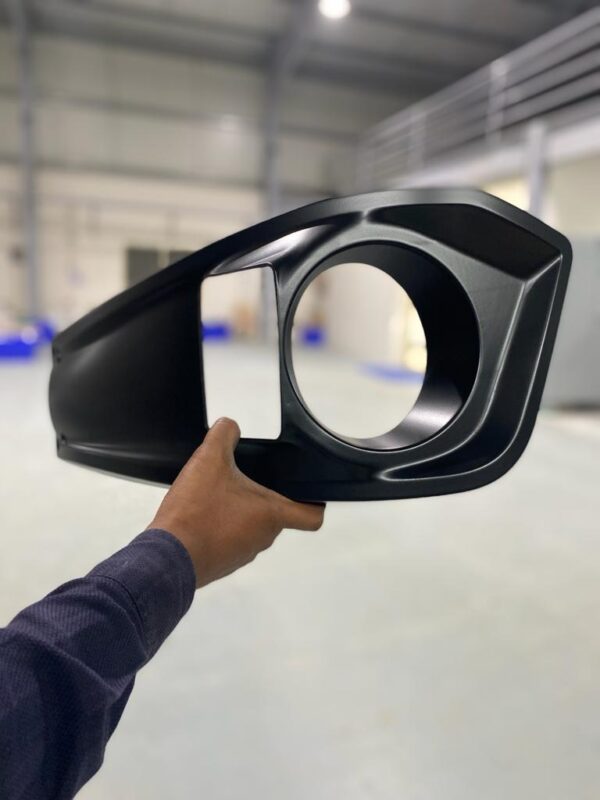
Amuse Matt Finish: Injection Moulded Aesthetics Without Injection Moulding
If you have ever held a premium consumer product and thought, this feels like a factory made part, you are usually looking at an injection moulded surface. The challenge is that achieving that same look often means committing to tooling, longer lead times, and higher upfront cost.
That is exactly where injection moulded finish 3D printing becomes a game changer. With the right process, material choice, and finishing workflow, you can get an injection moulding grade appearance from 3D printed parts and move faster from prototype to production.
At Amuse3D, we build production ready workflows that deliver consistent matt surfaces, clean edges, and repeatable results for industries that cannot afford delays, from consumer products to automotive programs.
This is not decorative spray painting.This is professional, multi-component industrial finishing designed for durability, chemical resistance, and long-term surface performance.
What is a matt finish and why does it matter
A matt finish reduces glare, hides minor handling marks, and gives parts a clean, premium look. It also photographs better for launches and marketing, and it feels more like the plastic parts people are used to seeing in retail products.
The good news is that modern additive manufacturing can achieve this level of finish without forcing you into tooling too early.
If your goal is an injection molding look without tooling, the surface finish plan must be part of the build strategy, not an afterthought.
How injection moulded finish 3D printing works in the real world
To get a true injection moulded aesthetic from 3D printing, you need three things working together:
- The right print technology for consistent skin quality
- The right orientation and build settings for uniform texture
- The right finishing steps to smooth, seal, and standardize the surface
This is where HP Multi Jet Fusion shines, especially when your priority is a consistent matt look across batches.
At Amuse3D, our HP MJF 3D Printing Services are built for scale, repeatability, and fast turnaround, so you can validate the market, ship pilot runs, and even support low to mid volume production.
Why HP MJF is ideal for a consistent matte surface
When teams search for HP MJF matte finish, they are usually looking for two outcomes: visual consistency and production confidence.
HP MJF is well suited for that because it delivers:
• Uniform surface texture across complex geometries
• Strong mechanical properties suitable for functional parts
• Reliable repeatability across builds, which matters for batch production
• Efficient throughput for tight timelines
That is why many teams use it to create production ready 3d printed parts that look and feel close to moulded parts.
Post Processing Options in HP MJF 3D Printing
Surface finish is where parts transform from functional prints into brand ready components. Here are the most common Post Processing Options in HP MJF 3D Printing that help achieve a matt injection moulded look:
- Bead blasting for a clean, uniform base texture
- Smoothing processes that reduce roughness and close the surface
- Dyeing for deep, even color with a premium feel
- Sealing and protective coatings to improve stain resistance and consistency
- Texture control workflows to match specific product expectations
The exact combination depends on your part geometry, tolerance needs, and the end use environment. This is where Design and Application planning matters, because the same finish recipe does not fit every product.
Injection moulded aesthetics without injection moulding
The biggest advantage is speed. You can test form, function, and market response before you invest in steel tooling.
This approach is especially useful when you need:
• Multiple design iterations in days, not weeks
• Regional variants or personalization
• Limited editions or pilot production
• Bridge manufacturing before full tooling
• Spare parts and service components without maintaining large inventories
In short, you get the look customers expect, while keeping your timeline and investment flexible.
Where this finish matters most: real use cases
Consumer product 3D printing that looks shelf ready
In consumer product 3d printing, surface finish is directly tied to perceived quality. A clean matt finish reduces the prototype look and helps teams do confident user testing, investor demos, and early sales.
Typical parts include:
• Housings and covers
• Wearables and handheld devices
• Clips, brackets, mounts, and enclosures
• Small batch launch units
Automotive interior plastic parts with a premium look
Automotive interior plastic parts demand consistent surfaces because they are close to the user, frequently touched, and often under harsh lighting.
Matt finishes help reduce reflections and make parts look integrated into a vehicle interior. This can support development builds, ergonomic trials, and early validation runs without waiting for tooling.
Medical 3D Printing for functional, clean surfaces
Medical 3D Printing often needs parts that are easy to handle, clean, and inspect. A controlled matt finish improves grip, reduces glare during use, and supports a professional appearance for devices and fixtures.
3D Printing Drone components that stay lightweight and professional
3D Printing Drone programs frequently require rapid iterations and weight optimization. A matt finish helps with professional presentation for demos, field testing, and customer validation, while still keeping parts functional and light.
3D Printing Aerospace & Defense for serious prototypes and pilot runs
3D Printing Aerospace & Defense projects often need durable parts with consistent quality for evaluation, fit checks, and limited production programs. A moulded like matt surface improves inspection, handling, and the overall readiness perception of the component.
3D Printing Automotive beyond interiors
3D Printing Automotive also includes jigs, fixtures, ducts, mounts, brackets, and under hood support parts. When a part is visible or customer facing, the finish becomes part of the engineering outcome, not just aesthetics.
When you should still consider Injection Moulding
Injection Moulding is the right move when volumes are high, unit economics require it, and the design is stable enough to lock.
But many teams rush into tooling too early. If you are still validating design, demand, or assembly fit, injection moulded finish 3D printing lets you stay flexible and still deliver a premium look.
A common path looks like this:
- HP MJF builds for functional validation
- Finished pilot runs for market testing
- Final refinements based on real feedback
- Tooling investment with confidence
- Scaled production using Injection Moulding
Amuse3D supports both sides of that journey, including 3D Printing Services for rapid production and Injection Moulding for scaled manufacturing once your design is ready.
Beyond 3D printing: hybrid manufacturing for the best outcome
Sometimes the best result comes from combining processes.
For example:
• 3D printed housings with CNC finished interfaces
• Printed parts for pilot runs, then moulded for scale
• Machined inserts and fixtures to support assembly and testing
If your product requires tight tolerances or critical mating surfaces, CNC Machining Services can complement 3D printing and help you hit both aesthetic and dimensional targets.
Practical tips to get the best matt finish
- Decide your finish target early, before finalizing geometry
- Avoid sharp cosmetic edges where texture variation becomes obvious
- Design consistent wall thickness to reduce surface inconsistency
- Plan for finishing access in recesses and internal features
- Align material choice with end use expectations, heat, wear, and feel
- Validate with a small batch first, then standardize the process
This is where our team helps most, translating your requirements into a repeatable manufacturing and finishing workflow.
Conclusion
If you want injection moulded aesthetics without injection moulding, the right 3D printing and finishing strategy can deliver the look customers expect while keeping your product timeline agile. With HP MJF, proven finishing workflows, and a manufacturing partner who understands Design and Application, you can ship production ready 3d printed parts that look professional, feel premium, and scale when you are ready. Get Instant Quote at amuse3d.in and contact us to start your next build.
General inquiries? Questions about engineering? Do you seek support with your design?

.png)