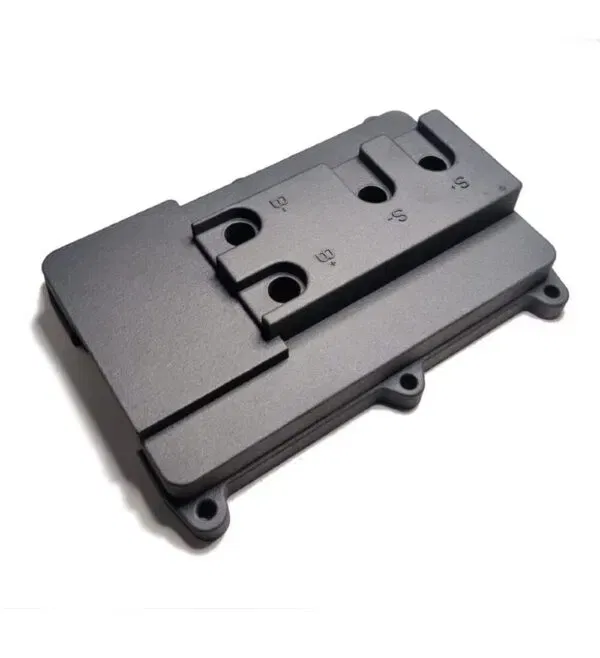
Rapid Tooling Through 3D Printing: Transforming Manufacturing Timelines
In contemporary manufacturing processes, speed and efficiency are essential for success. Conventional manufacturing processes have been known to take many months and a large budget to create tooling molds before production starts. This is where rapid tooling comes into play as an innovative technology. Through 3D printing, the time required to create functioning molds, dies, and fixtures can be greatly reduced.
The blog provides a comprehensive description of how rapid tooling operates, the various types of rapid tooling, its benefits, and its clear operational limitations.
What Is Rapid Tooling?
Rapid tooling is an approach to manufacturing that uses additive manufacturing, along with conventional casting or molding, to produce molds, cores, inserts, and patterns in a matter of minutes rather than days.
Rather than wasting weeks machining molds with traditional techniques, engineers use 3D printing services to produce them in a few days. This technology is widely used across many sectors that require highly accurate design and application models for validating part functionality before mass production.
Rapid Tooling in Additive Manufacturing
Rapid tooling in additive manufacturing has revolutionized prototype design and low-volume production. Unlike traditional CNC machining, additive manufacturing allows the creation of intricate internal geometries, such as conformal cooling passages in injection molds. These channels increase cooling efficiency, shorten cycle times, and prevent part warping.
Advanced technologies like HP MJF 3D Printing Services can produce robust, high-density nylon components and sturdy tooling patterns. These features enable companies to incorporate their 3D-printed inserts into their existing mold bases without delay.
Types of Rapid Tooling
It is very important to understand the various types of rapid tooling, as this is necessary when choosing the right manufacturing method for your parts.
Direct Rapid Tooling
With direct rapid tooling, the molding cavity, cores, or inserts can be produced from CAD files using 3D printing technology without patterns. SLA and DMLS are examples of these technologies. Such tools provide rapid production, and generally manufacture 10-500 plastic parts, whereas metal 3D-printed inserts manufacture up to 5,000 parts.
Indirect Rapid Tooling
Rapid Indirect tooling uses a 3D-printed master pattern to generate molds from secondary materials such as silicone and plaster. This technique is dependable, scalable, and allows the creation of 50-1,000 parts, depending on the material used to make the mold.
Soft, Bridge, and Hard Tooling
Most molds can be categorized based on their materials and life expectancy:
- Soft Tooling: Primarily uses silicone, polyurethane, or 3D-printed resin materials. It works well for low quantities (10 to 100 shots) and fast mechanical tests.
- Bridge Tooling: Often uses aluminum and/or reinforced printing materials to fill the production gap, processing parts from 1,000 to 10,000 until the hard tooling is created.
- Hard Tooling: Constructed out of tool steel through conventional construction methods. It is designed for large-scale production and provides more than 100,000 shots.
Rapid Tooling vs Rapid Prototyping
Many people get confused between rapid tooling and rapid prototyping because they play different roles in manufacturing products.
A comparison of rapid tooling and rapid prototyping will help companies determine the best manufacturing method.
Whereas rapid prototyping focuses on assessing product designs, rapid tooling focuses on preparing the manufacturing process itself.
Rapid Tooling for Injection Molding
Rapid tooling for injection molding allows manufacturers to prototype production-grade plastic parts during development. The process often starts with 3D-printed inserts in master molds for small runs. As demand grows, aluminum molds produced through CNC machining services become suitable for medium-volume production.
Whether to use rapid tooling or hardened steel tools depends on the production quantity and the costs involved. For projects exceeding 10,000 units per month, hardened steel tooling is recommended because it is more durable, provides consistent measurements, maintains tight tolerances, and reduces production costs.
Benefits of Rapid Tooling
Using a contemporary approach towards the benefits of rapid tooling can result in many competitive advantages for manufacturing groups:
- Drastically Reduced Lead Times: Molds that previously required months can now be produced in days with advanced additive technology.
- Substantial Cost Savings: Avoiding costly custom tooling setups in low-volume runs saves precious capital.
- Design Flexibility: Engineers can easily modify, iterate, and print new molds without costly machining modifications.
- Exceptional Industry Adaptability: Rapid turnaround of tools is highly beneficial for specialized workflows such as 3D printing automotive parts, customized devices for medical 3D printing, lightweight housings for 3D printing drone designs, and complex brackets for 3D printing aerospace designs.
Limitations of Rapid Tooling
Despite all its benefits, rapid tooling does have some structural limitations that need to be taken into account before being fully adopted:
- Limited Lifespan: Polymer-based direct-molding tools have short lifespans due to rapid deterioration under extremely high injection pressure and very high temperatures.
- Surface Finish Constraints: The 3D molds typically have layer lines that need to be polished manually to achieve a high-gloss finish.
- Material Restrictions: Some filled engineering plastics require extremely high processing temperatures, to the point that rapid tooling materials can deform faster than conventional steel molds.
Choosing the Right Rapid Tooling Approach
Choosing the right option depends on assessing your production capacity, materials required, and schedule. If you need fewer than 100 units for validation, consider direct resin printing or indirect silicone molding.
The use of aluminum inserts through CNC machining services is essential to achieve adequate strength for market testing of up to 10,000 units. When seeking manufacturing assistance in your location, partnering with a reliable 3D printing company in Chennai is an effective way to ensure smooth manufacturing processes.
Conclusion
The process of rapid tooling using 3D printing technology connects the world of product design and manufacturing. It minimizes lead times, reduces cost, and accelerates innovation. Amuse3D provides innovative manufacturing solutions, including HP MJF 3D printing, precision CNC machining, and rapid mold-making. Based in India, Amuse3D assists global companies in simplifying their processes from design to production with high accuracy and fast delivery times.

.png)