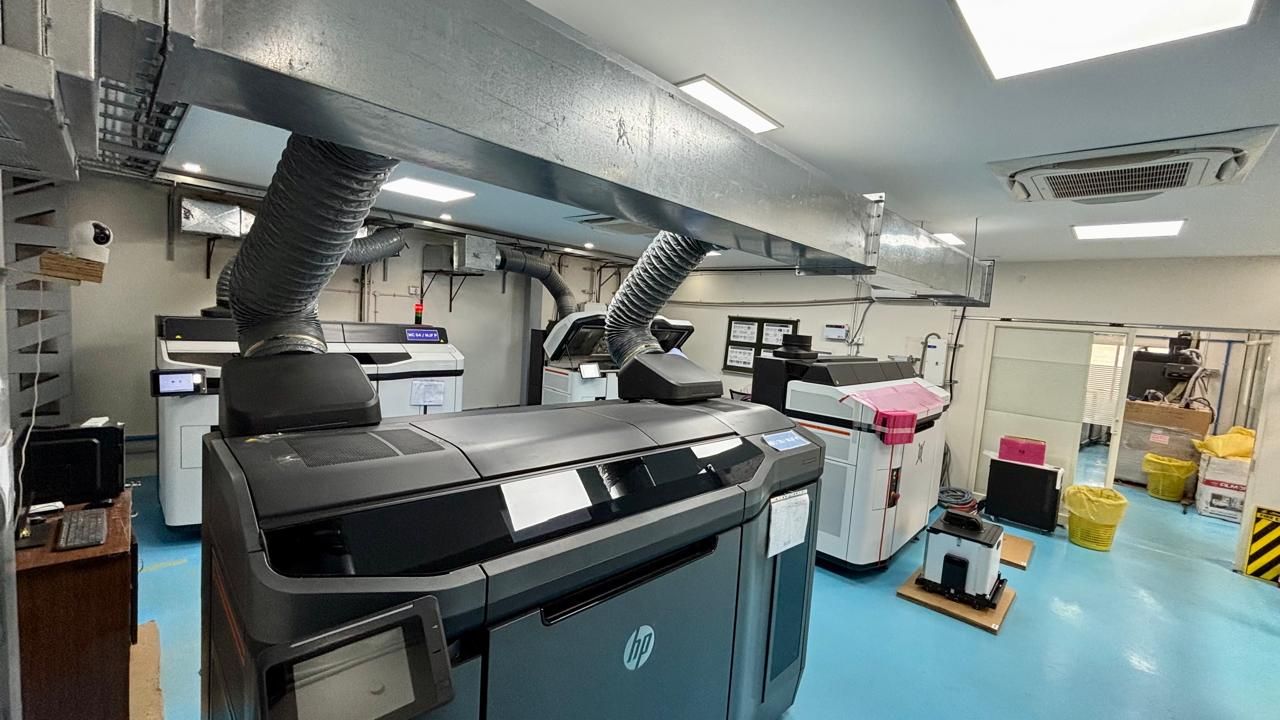
Choosing an MJF 3D printing service is not just about finding a vendor with the right machine. The quality of your parts depends on material options, dimensional accuracy, finishing support, lead time, and the provider’s ability to understand your application. Whether you need functional prototypes or low-volume production parts, selecting the right MJF partner can help you avoid delays, poor surface finish, and unnecessary cost.
This guide explains what to look for when choosing an MJF 3D printing service, including pricing factors, production capabilities, quality checks, and the questions you should ask before placing an order.
Businesses across automotive, medical 3D printing, drone manufacturing, and 3D Printing Aerospace & Defense increasingly rely on the right MJF 3D printing service partner for strong, production-ready parts.
What is MJF 3D printing?
MJF or Multi Jet Fusion is an industrial 3D printing technology developed by HP. It uses powdered material, typically Nylon PA12, along with fusing and detailing agents to create strong, accurate parts with consistent mechanical properties. Businesses often choose MJF for functional prototypes and end use parts that need better strength and finish than standard desktop 3D printing can offer.
What to Look for in an MJF 3D Printing Service Provider
- Machine capability: Check whether the provider uses industrial HP Multi Jet Fusion systems suitable for production-grade output.
- Material options: Ask what materials are available, such as Nylon PA12, and whether they suit your part requirements.
- Dimensional accuracy: A reliable service should be able to maintain part consistency across builds.
- Finishing support: Surface finishing, dyeing, bead blasting, and post processing can improve the final appearance and usability of parts.
- Design guidance: A good provider should review your CAD file and suggest improvements for printability and performance.
- Batch flexibility: Choose a service that can support both one-off prototypes and repeat production runs.
- Turnaround time: Fast quoting and predictable lead times are essential for engineering projects and product development cycles.
When MJF Is the Right Choice for Your Project
MJF is a strong option when your parts need to be more than simple visual models. It is especially suitable for:
- Functional prototypes that need real-world strength and fit testing
- Complex geometries with internal channels or intricate features
- Low-volume production where tooling for injection moulding is not practical
- Lightweight but durable parts for automotive, 3D printing drone parts, and engineering applications
- Projects with tighter turnaround times than traditional manufacturing can support
If your requirement is only a basic visual prototype at the lowest possible cost, other 3D printing methods may be sufficient. But for parts that need performance, repeatability, and professional finish, MJF is often the better choice.
How MJF 3D Printing Service Pricing Is Calculated
The cost of an MJF 3D printing service depends on several project-specific factors:
- Part volume: Larger parts consume more material and build space
- Material usage: Material choice affects both performance and cost
- Build efficiency: Printing multiple parts in one build can reduce per-part cost
- Post processing: Finishing, cleaning, dyeing, or smoothing may add to the final price
- Order quantity: Batch orders may improve cost efficiency compared to one-off parts
- Delivery timeline: Urgent jobs may involve faster production scheduling
When comparing quotes, do not look at price alone. A lower quote may not include file review, quality checks, finishing support, or realistic turnaround commitments.
Compared with CNC Machining Services, MJF can be more cost-effective for complex plastic parts, especially when low-volume production or multiple iterations are required.
Questions to Ask Before Choosing an MJF 3D Printing Service
Before finalizing a service provider, ask these questions:
- What MJF machine and production setup do you use?
- Which materials do you offer for industrial parts?
- What tolerances can you typically achieve?
- What finishing options are available?
- Can you support both prototyping and low-volume production?
- What is your usual turnaround time?
- Do you review CAD files before printing?
- How do you check part quality before dispatch?
- Have you worked on projects similar to mine?
These questions can help you identify whether a vendor is only offering machine access or is capable of supporting your part from design to delivery.
Signs of a Reliable MJF 3D Printing Partner
A dependable MJF 3D printing service provider should offer more than fast printing. Look for signs such as:
- transparent communication during quoting and production
- clear guidance on material and design suitability
- consistent part quality and finishing standards
- realistic lead times instead of vague delivery promises
- support for prototypes as well as batch production
- experience across industries such as automotive, medical, aerospace, and drones
A strong service partner should help you choose the right manufacturing approach for your part, even if that means recommending CNC machining or injection moulding where appropriate.
Industry Use Cases and What Buyers Should Expect
Different industries have different expectations from an MJF 3D printing service:
- Automotive: Buyers should look for durable parts, repeatability, and support for lightweight functional components
- Medical: Precision, consistency, and application suitability are especially important for guides, prototypes, and custom parts
- Drones: The service should support lightweight geometries with enough strength for functional use
- Aerospace and Defense: Buyers should look for dimensional control, reliability, and material performance for demanding environments
Choosing a provider with cross-industry experience can improve both part quality and project outcomes.
Conclusion
Choosing the right MJF 3D printing service means looking beyond machine access alone. The right provider should offer material expertise, part quality, finishing support, reliable lead times, and the ability to support both prototyping and production requirements. For businesses that need strong, accurate, and functional plastic parts, MJF can be an efficient and scalable manufacturing solution when backed by the right service partner.
At Amuse3D, we provide HP Multi Jet Fusion 3D printing services for prototypes and production-ready parts across automotive, medical, drone, and aerospace applications. From CAD review to final part delivery, our team helps you choose the right approach for your project with speed, precision, and expert support.
Looking for a dependable MJF 3D printing service in Chennai or anywhere in India? Contact Amuse3D today to discuss your requirement or request an instant quote.
FAQs -
1. How do I choose the right MJF 3D printing service provider?
Look for machine capability, material options, finishing support, quality control, turnaround time, and experience with projects similar to yours.
2. What affects MJF 3D printing service cost?
Pricing usually depends on part volume, material usage, post processing, order quantity, and delivery timeline.
3. Is MJF suitable for prototypes or production parts?
MJF is suitable for both functional prototypes and low-volume production parts, especially when strength and accuracy are important.
4. How quickly can an MJF 3D printing service deliver parts?
Lead time depends on part size, order volume, and finishing requirements, but many projects can be completed within a few business days.

.png)