Why 3D Printing Is the Fastest Way to Move from Prototype to Production
Modern industries need faster time-to-market, lower costs, and quick market entry. It takes weeks or even months for traditional manufacturing processes to be completed due to molds and redesigns. This is where processes like prototype to production, made possible by 3D printing, really come into play.
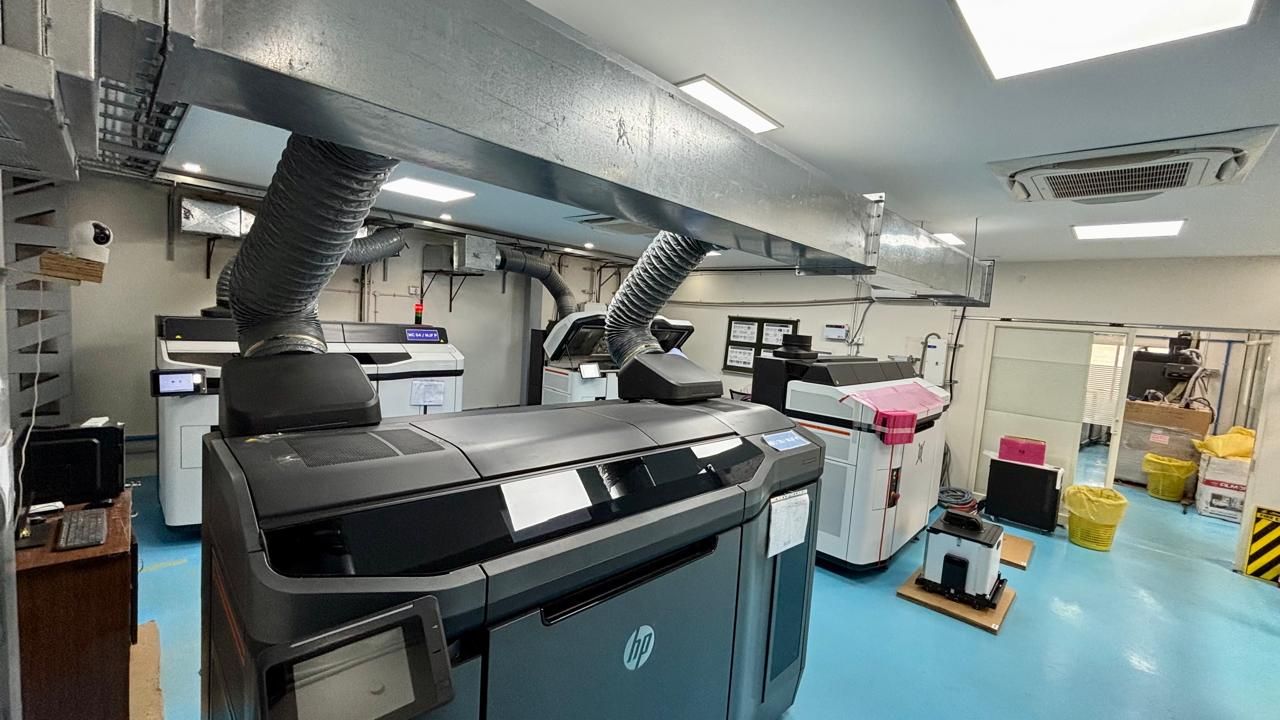
There are various industries where additive manufacturing techniques are applied in order to help in reducing the time taken in both product development and manufacturing. These include automotive, medicine, aerospace and even consumer products. Advanced technologies such as the HP MJF 3D printing technology can create durable and accurate parts for use in testing and in making final products, improving productivity of businesses.
Understanding Prototype to Production in 3D printing
Definition and Overview
The term prototype to production refers to the entire manufacturing process for a product, from its conceptual stage through to full-scale production. Previously, production and prototyping were done using separate techniques. Today, the emergence of sophisticated 3D printing services has linked all these stages together. One can use the same online model to create both prototypes and working components. This seamless process makes rapid manufacturing fast, efficient, and immensely important in various engineering and industrial fields.
Why the Prototype to Production Stage Matters
The transition stage between the design and production phases is very important. If a company rushes to conduct thorough testing during the transition phase, a single design mistake could cost millions of dollars in recall expenses at the production level. A slow transition process will enable the competitors to beat them to it.
By using production-ready 3D printers, engineers can ensure their parts undergo rigorous testing under stress conditions. This guarantees that the final products exhibit superior performance with minimal financial risk.
Key Takeaways
- Seamless Transition: This transition from the prototype phase to production can be sped up by using the same digital information at each step.
- Risk Reduction: Testing physical prototypes with functional 3D printing reduces the cost of post-launch errors.
- Time to Market: Through rapid manufacturing techniques, time-to-market is shortened from several months to several days.
- Toolless Workflow: Since no molds are required, design modifications cost nothing and take place in an instant.
Challenges in Moving from Prototype to Production
Tooling Delays and Design Changes
The traditional manufacturing method involves molds and dies that take a few weeks or even months to make. If any alterations are required in the design, the equipment needs to be modified or replaced, further increasing timeframes.
Cost and Time Barriers in Traditional Manufacturing
Traditional manufacturing techniques have very high setup costs due to the equipment used. Consequently, they work effectively only at very large scales. It is a great burden to new ventures and those working at small-scale levels.
How 3D Printing Supports Faster Manufacturing
Rapid Prototyping and Design Validation
With 3D printing, it is possible to print CAD designs into a tangible form within a few hours. The evaluation of designs in terms of fit, form, and function can be easily conducted, followed by modification.
Faster Iterations Before Final Production
With 3D printing technology, different design versions can be tested within a very short period. The engineers can change the dimensions, structures, and other characteristics of products without additional tooling.
Bridge Manufacturing with 3D printing
Bridge manufacturing helps companies make parts in small numbers during the start-up phase before actual production. The techniques involved include HP MJF 3D printing services. Companies can introduce their products, satisfy demand, and test them even before the actual prototype manufacturing tools are ready, thereby shortening their time-to-market.
Manufacturing Technology Comparison Table
Benefits of 3D Printing from Prototype to Production
The entire process of making transition from prototype to product can be extremely efficient with the help of state-of-the-art additive manufacturing technologies. Let's look at the primary benefits across industries:
- Design and Application Freedom: Engineers today can design complex organic forms, internal passages, and lightweight lattice structures that would not be possible at all with traditional techniques. New avenues for designing applications have been opened through innovative engineering design.
- No Minimum Order Constraints: Because there is no tooling cost, manufacturing a single item costs the same as manufacturing 100 items, since tooling isn't required in 3D printing. That means no storage cost for maintaining huge inventories.
- Material Efficiency: Unlike traditional CNC machining services, which involve removing large blocks of expensive raw material to give form to the object, 3D printing creates objects through successive layering of material, using exactly what is required.
If you have to choose between 3D printing and traditional methods like injection molding or CNC machining services, then quantity and complexity will be your main considerations. For an application that requires large quantities of small, identical, and simple plastic parts, injection molding remains your most viable option.
However, for a project that requires quick redesigns, complex geometries, no up-front tooling costs, and a quick time-to-market, production ready 3d printing is the perfect solution.
Conclusion
Using advanced 3D printing for production is one of the most effective ways for a business to increase product development speed, save money, and improve product quality. This approach cuts down many production challenges. Regional manufacturing hubs like 3D printing Chennai have ready access to sophisticated technology and local production know-how.
Amuse3D gives companies the capability to smoothly move from prototype to manufacturing and further to scale manufacturing through the use of its industrial-quality 3D printing services. These range from HP MJF 3D printing services to manufacturing in general, and give highly precise, durable parts that offer cost-saving solutions in various industries like automotive, medical, aerospace, and drones.

.png)